
Living and Working in a World Made of Snow
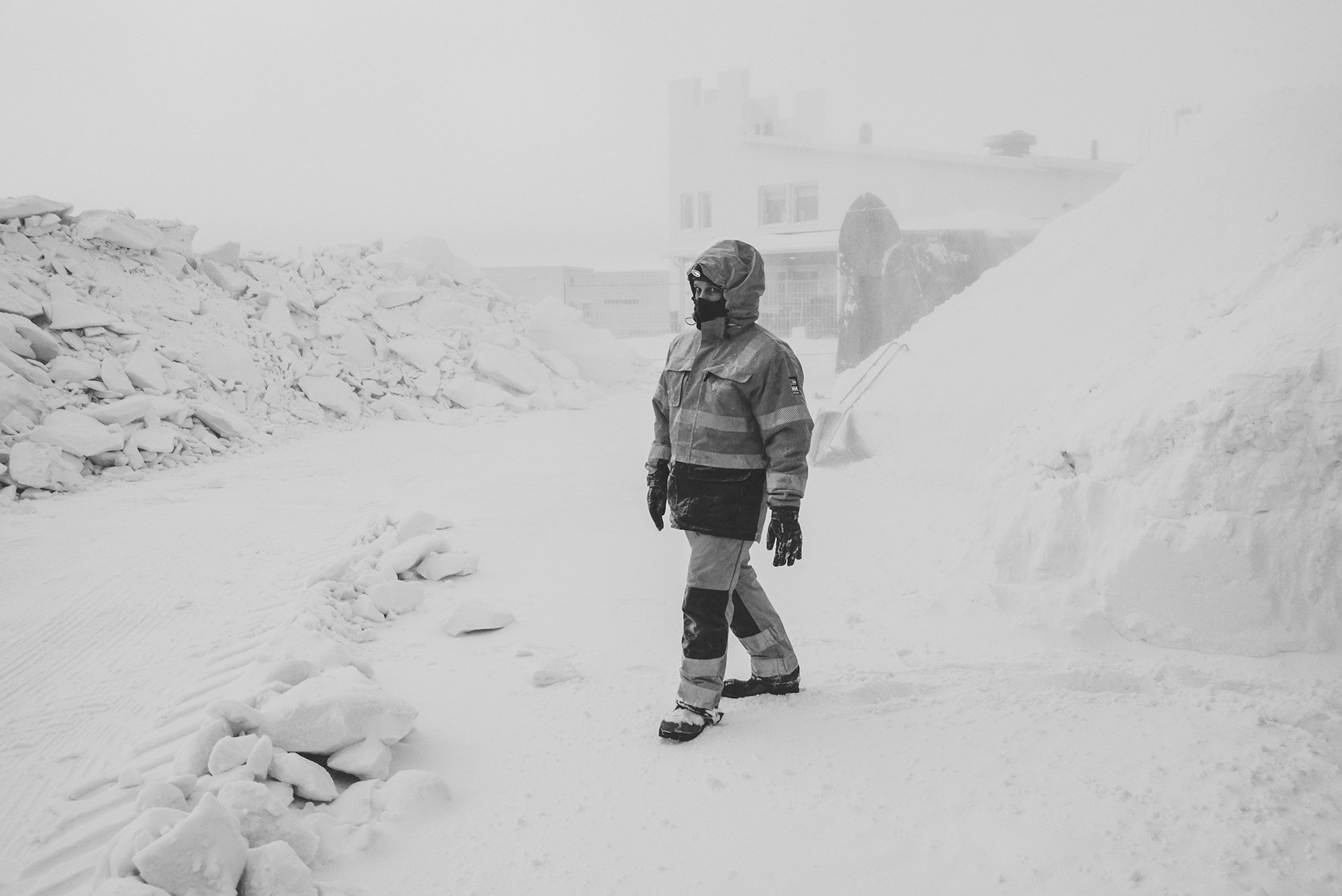
A freezing wind tears through my beard, biting at my chin. The thermometer reads -27°C (-16.6°F), but the wind cuts deeper, making the cold feel like something alive. I’m standing atop a wall of snow, looking out over the frozen Bothnian Bay, where the sea has surrendered to ice. Below me, the engine of a tractor growls—a low, steady rhythm in the silence of the Arctic winter.
A blast of snow erupts from the snow sling, tumbling through the air before settling into the wooden molds. That’s our job—to tamp the snow, to pack it solid before carving begins. The cold is merciless, but there’s no standing still. Lifting heavy tools, cutting ice with chainsaws, hammering, shaping, building—the work keeps the body warm. Just as exhaustion sets in, a voice calls out. Break time. A brief pause before the work begins again.
This is what the Frozen Warriors do—12 to 16 hours a day, through the heart of winter. Every year, we construct something monumental, knowing it will not last.
The Snow Castle of Kemi is not just an attraction; it’s an ephemeral masterpiece. First built in 1996, it has been reborn every winter, each time with a new architectural vision. Its walls have stretched as far as one kilometer, its footprint has spanned between 13,000 and 20,000 square meters. Inside, the elements remain the same—a chapel, a restaurant, a snow hotel—but the form is always different. No two years are alike.
What we build is temporary by nature, but that doesn’t lessen the craft. Every block of snow is cut, stacked, and sculpted with the same precision as stone or steel. The only difference is time. In just a few months, when the temperatures rise, the castle will dissolve into water, returning to the sea, as if it had never existed.
I wasn’t always just an observer. Eight years ago, I was hired as a builder. I held the tools, packed the snow, worked through the endless shifts in the deep cold. I felt the fatigue in my bones, the satisfaction in my hands. But I also carried my camera.
Since then, I have been documenting the life of the snow castle builders—the men and women who endure the cold, who build with their hands, knowing their work will vanish. There is something powerful in that. Something humbling. To create, knowing it will not last. To build, knowing it will disappear. To return each year, knowing you will do it all over again.
That is what it means to be a Frozen Warrior.
