
When the River Goes Quiet
Photography by Esa Ylijaasko & Petri Posti
The river was high, cold and quiet. The trout barely moved, but Finnmark kept offering other reasons to pay attention: a fox by the fire, a mink at the water’s edge, and northern lights above camp.
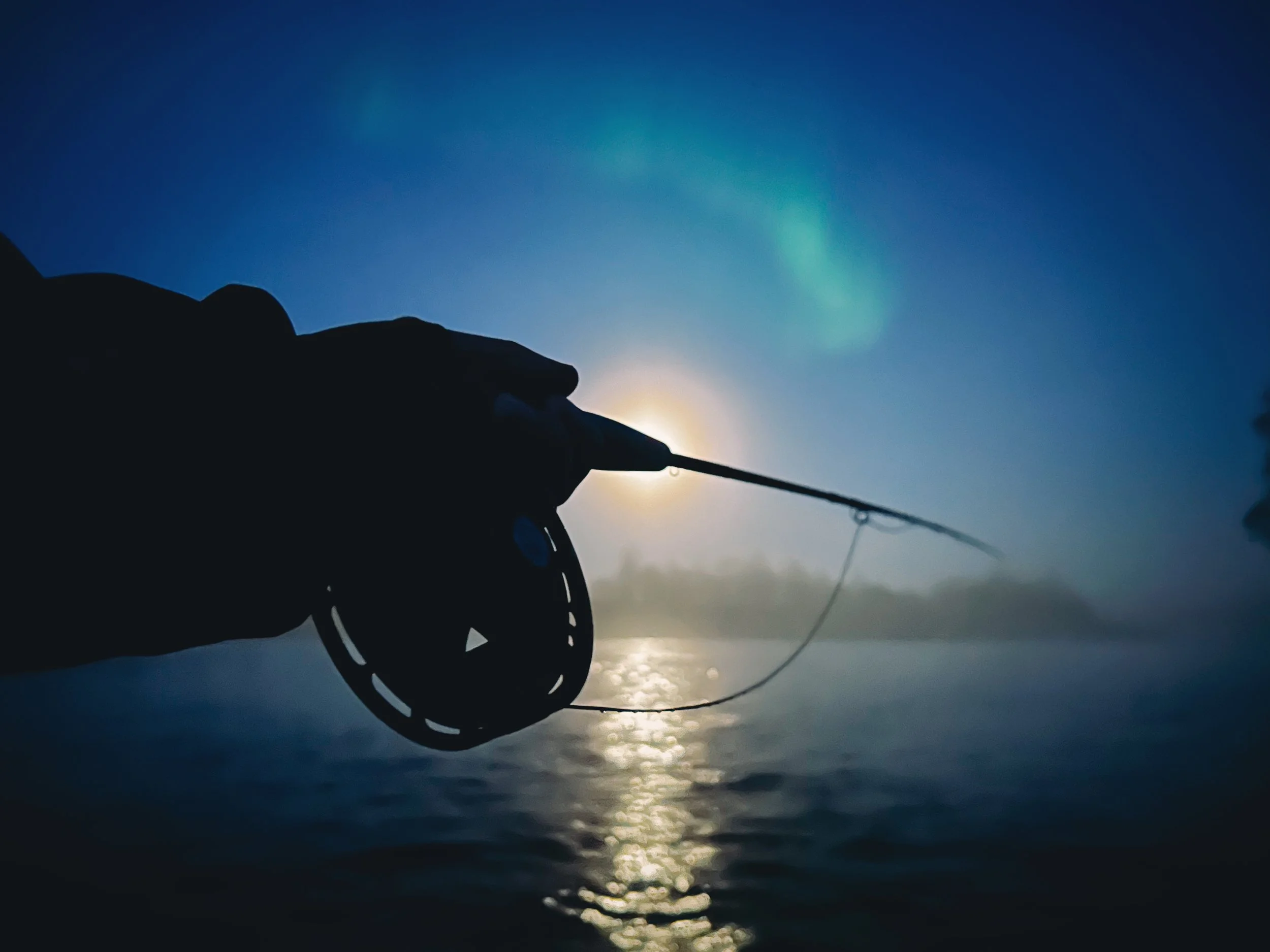
The sound of a river changes when you step into it.
From the bank, you hear water passing over stone, the separate noises of riffles and small falls, the occasional hollow rush behind a boulder. Wade into the current and those sounds close around you. The river is no longer something in front of you. It presses against your legs, fills your ears and makes the rest of the world feel farther away.
That afternoon in Finnmark, it was pressing harder than usual.
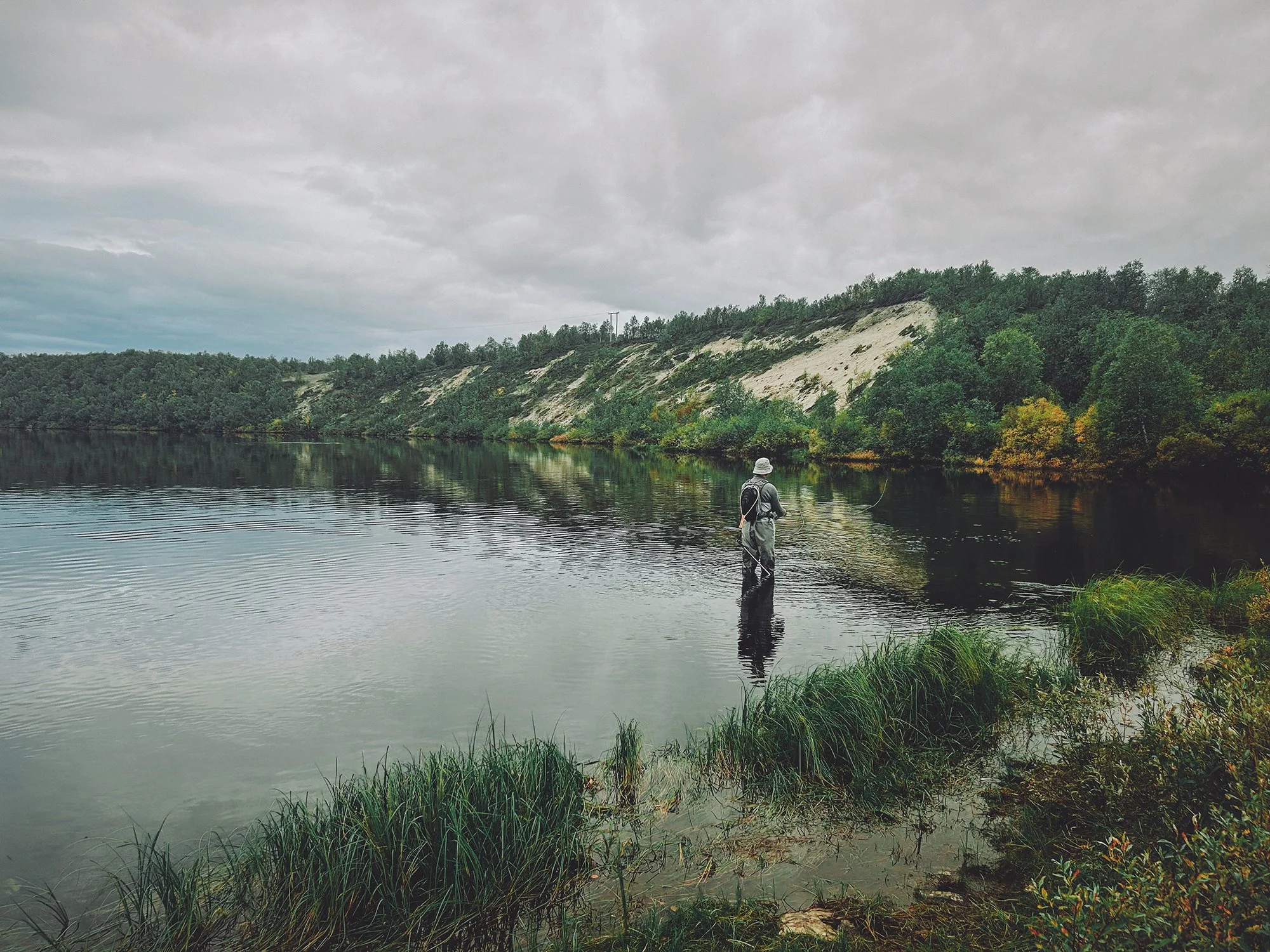
The water was high after rain and cold enough to make me wonder how willing the brown trout would be to move for a fly. Familiar rocks had disappeared beneath the surface. Seams I remembered from previous years had widened or vanished, and the current leaned heavily against my thighs whenever I moved farther from shore.
The few takes I had felt were hesitant. Nothing committed properly. A brief pull, a flash of life through the line, then nothing.
Across the river, through the trees, I could see the glow of the temporary campfire we had built on the bank.
My fishing buddy had given up on the pool before I had. He was sitting beside the flames while I continued working the current, changing angles, adjusting retrieves and trying to persuade myself that the next cast might be different.
His voice carried across the water.
“So, you came to sit there, did you?”
A moment later he shouted again.
“There’s a fox sitting beside the fire with me!”
I looked towards the bank.
While I stood waist-deep in cold water, stubbornly casting for a trout that seemed determined not to eat, a fox had wandered over to the fire and settled near my friend as he warmed himself by the flames.
It felt entirely appropriate.
It was good to be back on this small river in Finnmark, a river whose name I would rather keep away from the internet.
For several years now, around the end of August and the beginning of September, we have driven north to Norway. This time we loaded my black four-wheel-drive with rods, waders, tents, food and too much fishing gear, then pointed it towards Finnmark.
There was no hurry.
That is part of these journeys. The farther north you drive, the less useful rushing begins to feel. Towns thin out. Roads stretch across open country. The phone becomes quieter. Somewhere along the way, the things that seemed urgent at home begin to lose their grip.
For a few days, life narrows into something manageable.
You wake beside moving water. You boil water for green tea. You study the river. You fish until hunger or darkness sends you back to the tent. You cook over a fire and fall asleep listening to the current.
If the river is generous, there may also be a trout.
COLD WATER AND CAREFUL TROUT
For the first few days, there were none.
I lost a couple of decent brown trout, probably somewhere between 35 and 40 centimetres, or roughly 14 to 16 inches. Both takes came at moments when I was least prepared for them.
The trout struck while I was retrieving line and already thinking about the next cast. There was too much slack, or my reaction was a fraction too slow. Perhaps the fish never took properly in the first place.
Whatever the reason, both were gone almost as soon as I felt them.
Even a lost fish tells you something.
During daylight, a completely black streamer with a small touch of gold drew the most attention. Another dark pattern with a restrained red hotspot also produced signs of interest. Against the cold, clear water, those small flashes of gold and red seemed enough to make a trout turn.
Then evening arrived, and the river changed.
The final hours of daylight should have been the most promising. Instead, the water seemed to empty.
There were no rises. No follows appeared behind the streamer. The line swung through pools that looked almost impossible to fish without expectation, yet nothing touched the fly.
I was fishing a nine-foot, six-weight Hardy Aydon with a Ross Reels Evolution LTX. I swung streamers across the current, stripped them quickly and retrieved them so slowly that the fly seemed almost to hang in place. I let them sink deeper into the pools and worked them just beneath the surface.
The trout ignored all of it.
The year before, I had caught at least one fish every day on this river. That kind of success is dangerous because it leaves behind the illusion that you have understood something.
Then you come back.
The water is colder. The level is higher. The fish behave differently, and whatever knowledge you thought you had suddenly feels temporary.
That is one of the useful things rivers do.
They refuse to stay solved.
Finally, a Fish
Later in the week, we decided to explore a section I had mostly overlooked during previous visits.
I had been coming to this river for five years, yet there were still bends I had walked past, pools I had barely studied and stretches that had always seemed to belong to another day.
We started fishing at around six in the evening. There was still plenty of daylight, and we began near a place where my friend had hooked a large trout the year before.
He had lost that fish.
A lost trout can give a piece of water a long memory.
I worked the streamer through the current.
Then the river finally answered.
A brown trout took hard and immediately broke the surface, throwing itself almost half a metre, around 20 inches, into the air. For a moment I saw the whole fish against the light before it dropped back into the river.
The hook stayed in.
The trout turned downstream and used the high water well. I kept pressure on it without forcing the fight, following where I could and letting the rod absorb the sudden runs.
My fishing buddy was only a few metres behind me, hidden from view by a bush, but he happened to be on the phone. I knew I would have to manage the landing myself.
After roughly five minutes, the trout began to tire. I drew it into softer water, lowered the net and guided it over the rim.
For several seconds I simply looked at it.
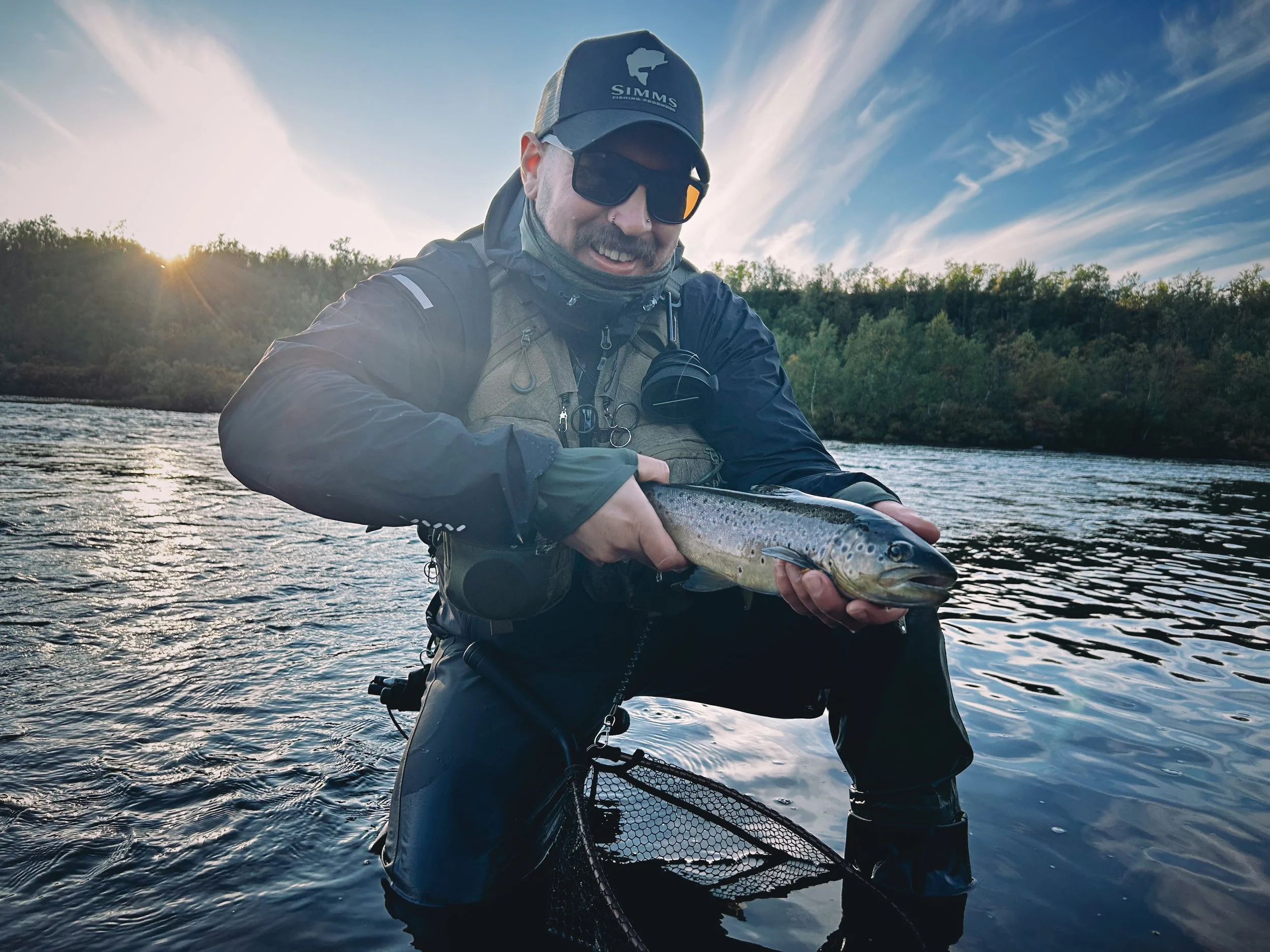
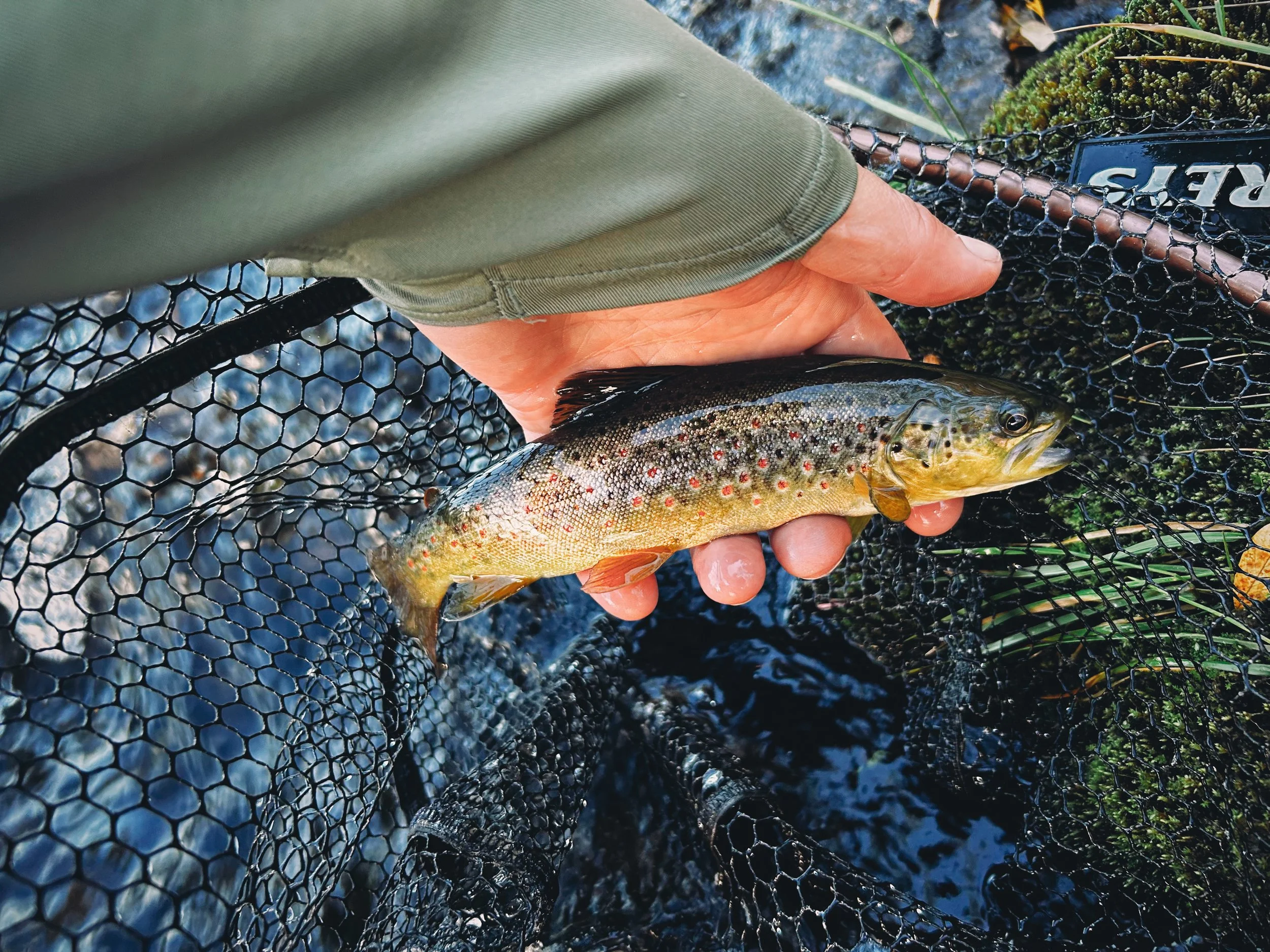
The fish measured 40 centimetres, or 16 inches. Its colours seemed unusually bright against the dark mesh, with the warm tones of a northern brown trout made sharper by the cold water around it.
The streamer sat in its mouth: size six, black, tied at my desk before the trip, with a little gold flash and a red hotspot.
It was not a giant.
After several days of missed takes, empty pools and cold water pushing against my legs, size had become almost irrelevant.
I had tied the fly. I had chosen the water. The trout had taken.
For once, all the small decisions had lined up.
For a while, I thought the fish might signal a change in the river. Perhaps the temperature had shifted enough, or the trout had begun moving as evening approached.
Instead, the sun dropped lower and the water became quiet again.
My friend caught one small brown trout of around 20 to 25 centimetres, about 8 to 10 inches, and had a few other signs of interest. After that, neither of us touched another fish.
We moved through pools that looked almost too good to be empty. Deep water gathered beneath undercut banks. Current lines folded around boulders. Dark channels disappeared beneath overhanging vegetation.
There were trout there.
We simply could not make them show themselves.
Rain Over Finnmark
Eventually, the rain became too heavy to ignore.
We gave the river a day without us and went driving with a friend who had lived in Finnmark for years and had worked as a fishing guide in the region.
We headed towards Alta.
He showed us stretches with potential for sea trout and pointed out water I would probably have driven past without understanding what I was looking at.
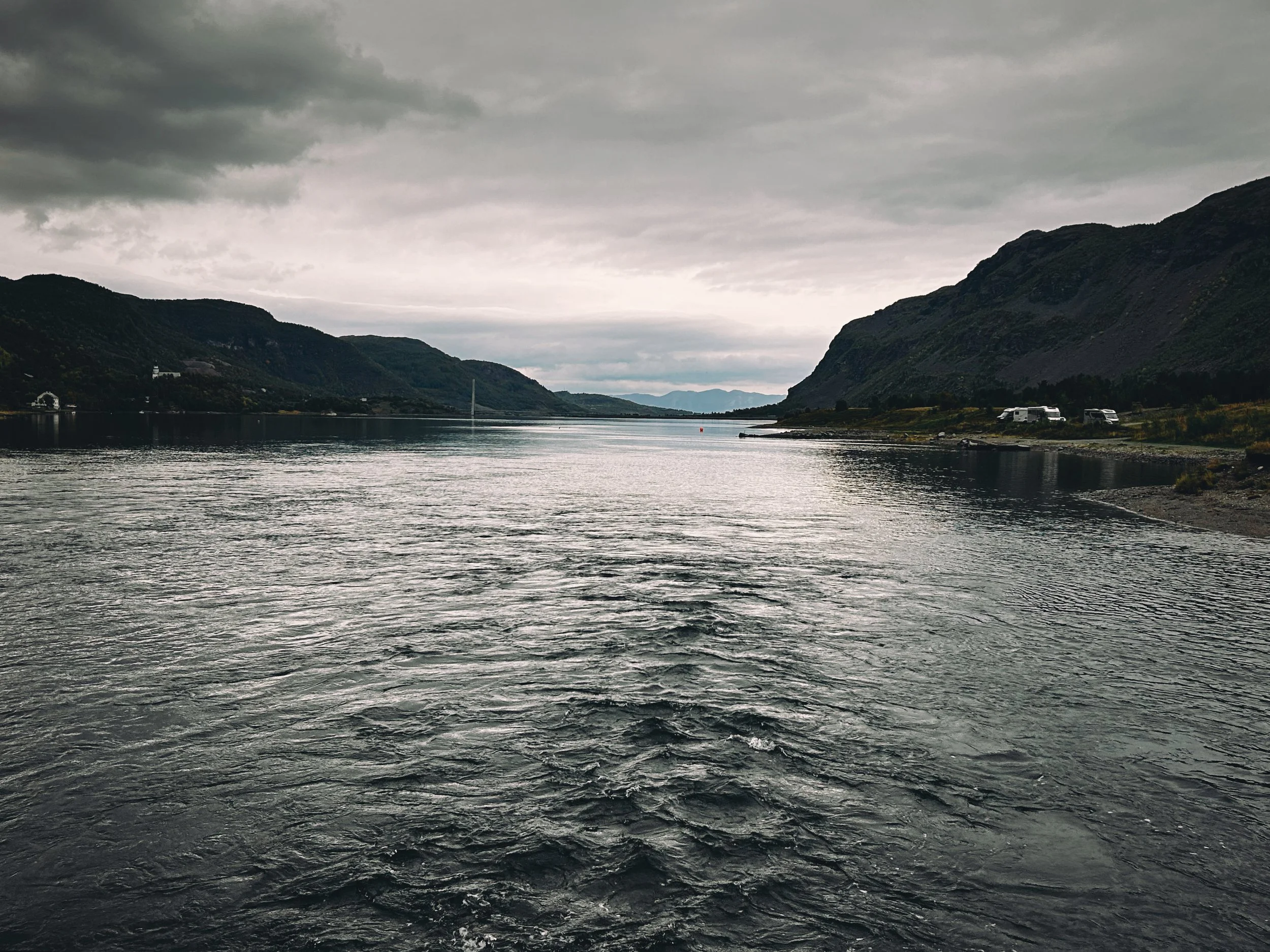
The weather followed us through the day. Low clouds sat against the mountains, and rain moved across the landscape in grey sheets.
Norway has always looked different to me through the eyes of an angler.
A road is rarely only a road. You notice bridges and immediately look down. Valleys make you wonder what flows through them. A thin silver line on a distant hillside becomes a stream worth remembering.
In Finnmark, there seems to be water everywhere.
Rivers move through broad valleys and disappear between mountains. Waterfalls hang from dark slopes. Small streams cross beneath the road and continue towards places you cannot see.
Even on a day when the rods stayed packed away, fishing remained somewhere in the background.
A Visitor in the Bushes
After the rest day, we returned to the stretch where I had caught the 40-centimetre trout.
Several fishless days had passed since then. The brown trout remained difficult, appearing briefly and then disappearing again as if the river were offering only enough encouragement to keep us searching.
My friend continued towards another section while I stayed at the familiar pool.
I was casting upstream when something moved in the bushes behind me.
At first I saw only dark fur between the branches. Then a mink stepped from the vegetation and began walking towards the water.
It did not seem particularly concerned by me.
The animal came all the way to a rock beside where I was fishing, stopped and rose onto its hind legs. Its nose worked at the air while it watched me.
I kept casting.
For a strange little moment, the two of us shared the edge of the river.
I reached for the walkie-talkie and quietly told my friend what had appeared beside me. His reply crackled from the speaker.
The mink dropped onto all fours and vanished into the bushes.
That was the most excitement the pool gave me all evening.
I worked through the streamers I trusted first. When those failed, I began opening the less respectable corners of the fly box, where experimental patterns and forgotten ideas tend to accumulate.
Bright flies, dark flies, large ones, small ones.
The river rejected them all.
My friend had found better water.
Later, he returned with news of a beautiful 49-centimetre brown trout, just over 19 inches long. The fish had dark golden flanks and vivid red spots, the kind of trout that seems perfectly matched to the water it came from.
The larger fish had been there all along.
They were simply choosing when to reveal themselves.
That night, darkness settled over camp and the northern lights appeared above us.
Pale green bands moved slowly across the Finnmark sky while the river continued below, indifferent to how many trout we had landed or lost.
We stood outside and watched until the cold began to find its way through our clothes.
What the River Gives You
We had planned to stay longer.
Then the forecast changed again.
Another long period of rain was moving towards Finnmark, enough to make several more days beside the river look less like fishing and more like sitting inside a wet tent waiting for an opening that might never arrive.
We packed the camp.
Tent poles disappeared into bags. Waders were rolled while still damp. Fly boxes went back into packs, food into crates, rods into their tubes.
Then we started the long drive south.
The trout we had talked about before the trip, the brown trout over 50 centimetres, around 20 inches, never came.
The river had been high and cold. The best-looking pools had often been silent, especially during the hours when we expected them to come alive. Fish that showed interest did so briefly. Others never showed themselves at all.
Yet when I think back to the trip, those are not the first things I remember.
I see the glow of the temporary fire through the trees and my friend sitting beside it with a fox nearby.
I see a mink standing upright on a rock while I cast upstream.
I see the black streamer in the mouth of a bright Finnmark brown trout, a fly tied at home months earlier and carried north in a box full of possibilities.
I see my friend’s 49-centimetre trout, dark gold and spotted red.
Above all of it, I see the northern lights moving over camp while the river continued through the darkness.
We drove to Finnmark hoping for a large brown trout.
Instead, the river gave us a handful of fish, difficult water, wild visitors and another reason to return.
That was enough.
