The River We Inherited
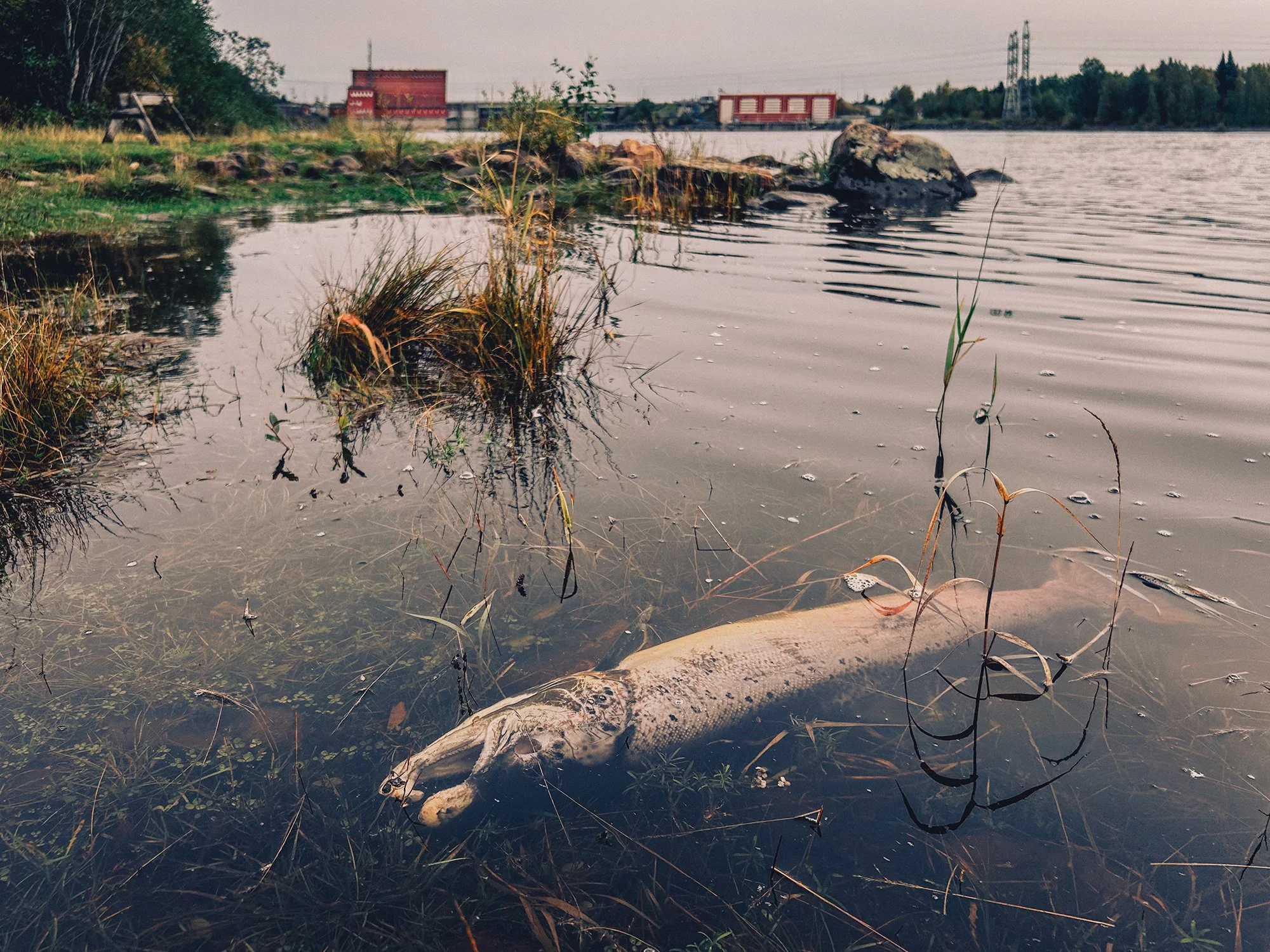
I grew up beside the Kemijoki without ever knowing it as a free river. Beneath Isohaara, the story of salmon, family, loss and hydropower feels less like history and more like a choice we have been forced to inherit.
Photography by Esa Ylijaasko
I have never known the Kemijoki as a free river.
I was born beside it. I grew up beside it. I fished it before I was old enough to understand what fishing was, first with my father and later on my own. After years spent travelling around the world with a camera, I eventually came home and settled beside the river again.
It has always been there.
So has the concrete.
Every time I see Isohaara, the feeling is immediate. The dam rises across the lower Kemijoki with the weight and confidence of something built by people who believed a river could be redesigned. Water enters one side, electricity leaves the other, and between those two points stands a monument to an age when controlling nature was considered progress.
I understand why it was built.
I also believe it should not be there anymore.
Those two thoughts have learned to live beside each other.
After the Second World War, northern Finland was devastated. German troops retreating from Lapland destroyed bridges across the Kemijoki in 1944, severing rail connections north. In 1945, Pohjolan Voima proposed rebuilding the crossing on the condition that it could construct a hydropower plant alongside it. The dam bridge followed, and the Isohaara power station was completed at the end of that decade. The Finnish Heritage Agency now recognises the complex as a nationally significant built cultural environment, describing it as a monumental landscape representing the reconstruction of Lapland and the development of Finland's energy economy.
There is no reason to erase that history.
Finland needed rebuilding. It needed electricity. People needed work, industry and a way forward after a war that had left much of Lapland burned.
But history becomes dangerous when understanding a decision turns into believing that decision must remain permanent.
The price of Isohaara was paid by the river.
Before hydropower construction, the Kemijoki was one of Europe's most significant salmon rivers. Atlantic salmon came from the Baltic Sea and travelled deep into the river system. Sea trout, whitefish, lamprey and other migratory species moved with them. Their journeys linked the sea to spawning grounds hundreds of kilometres inland.
Salmon were also tied to people.
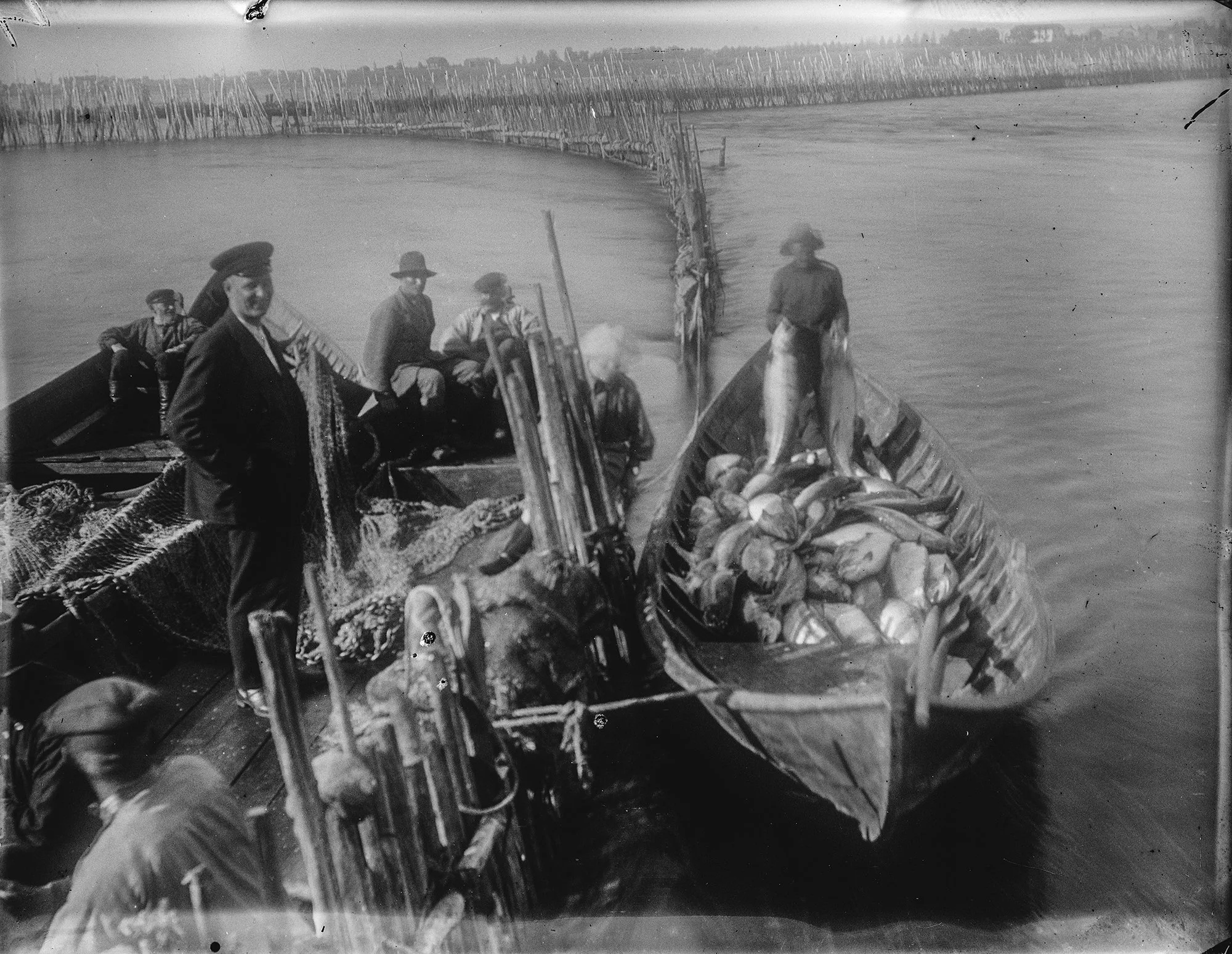
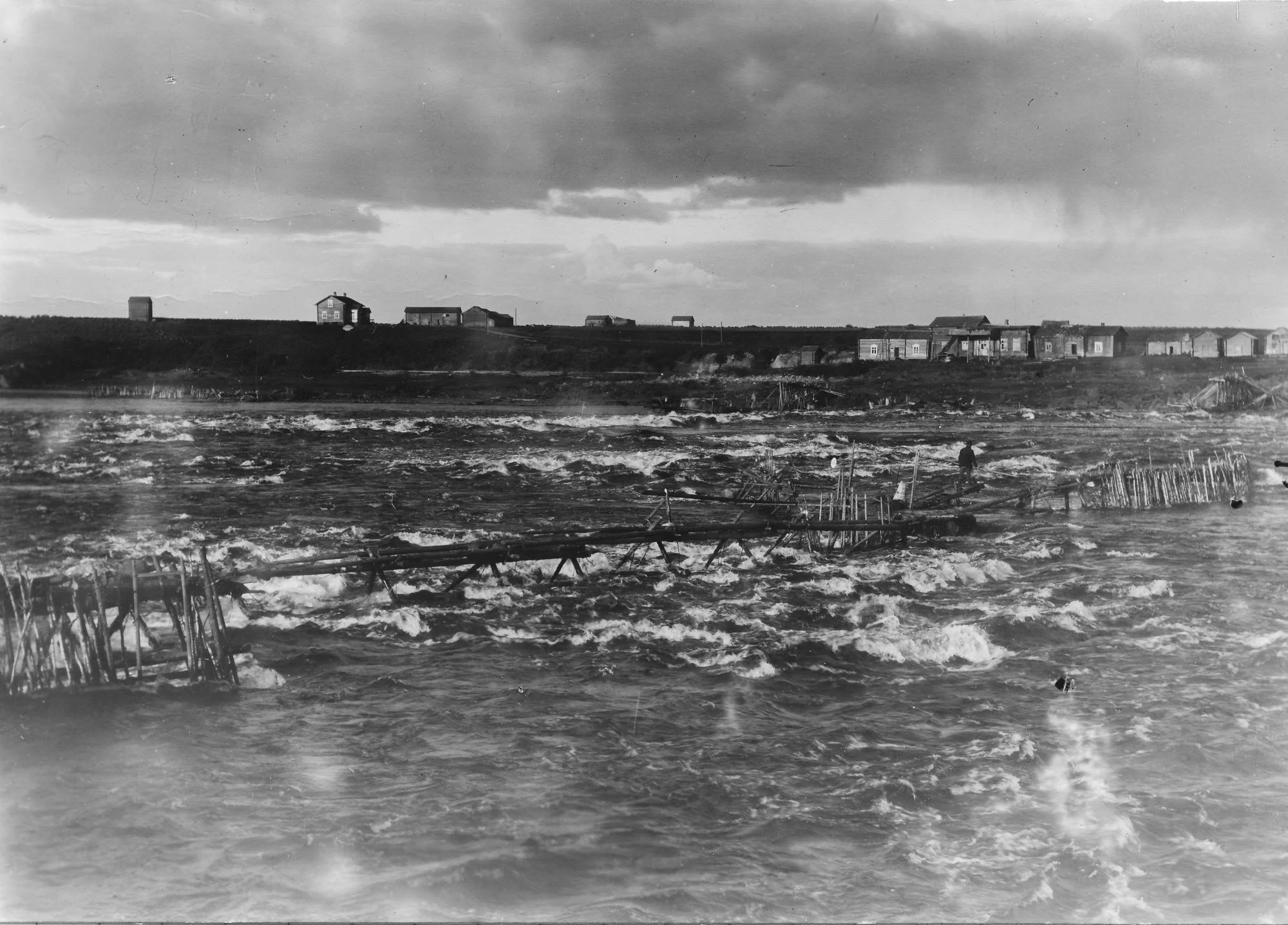
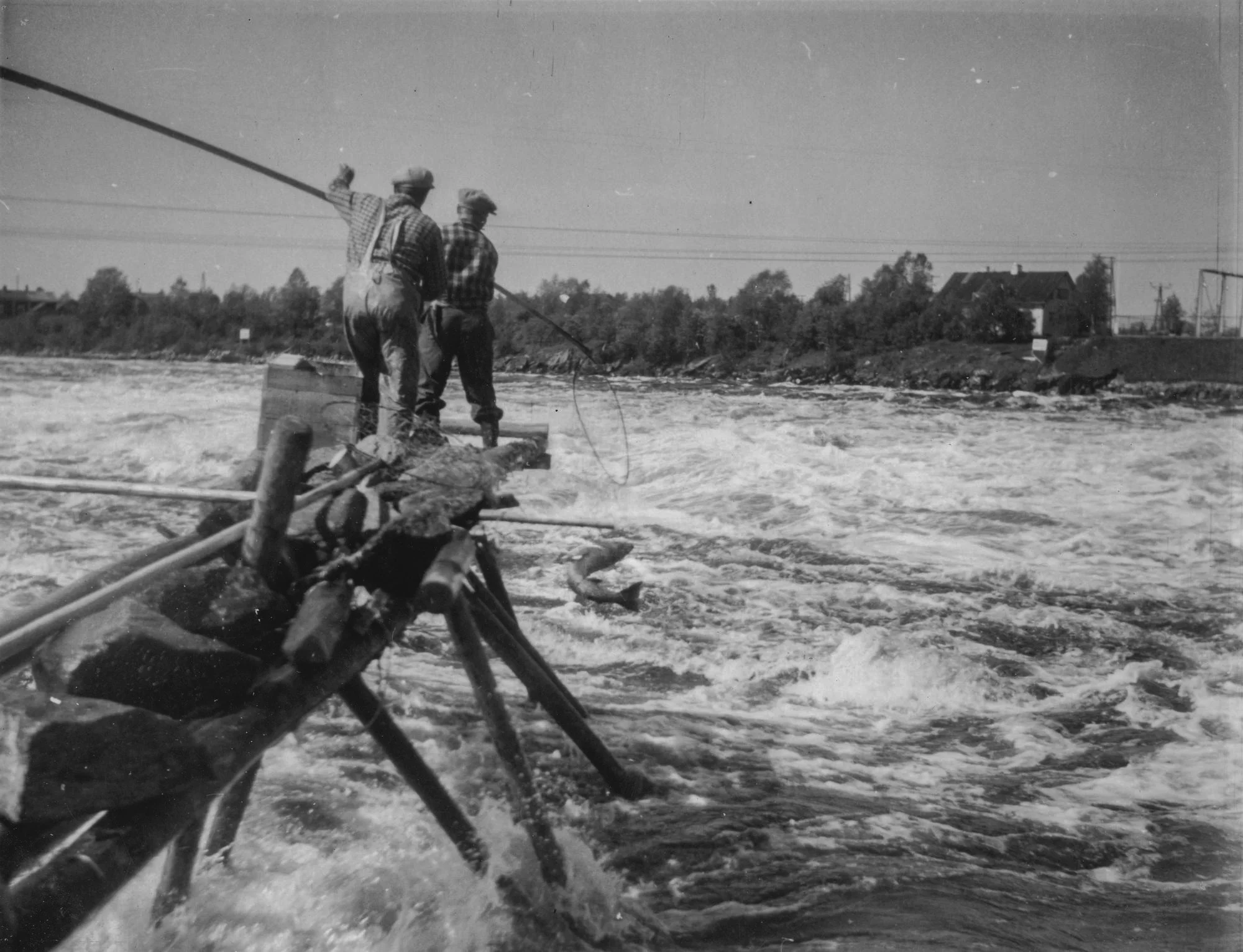
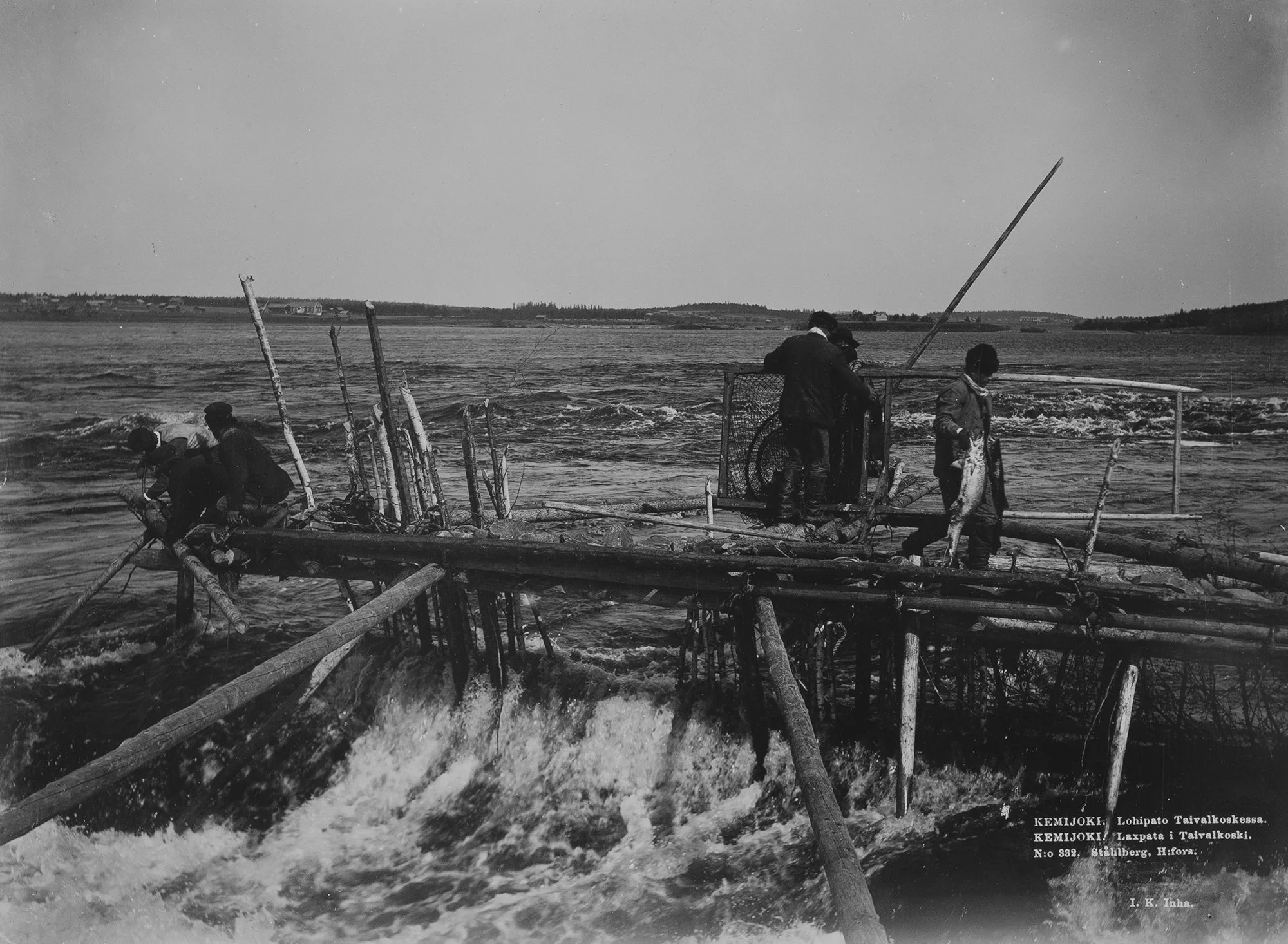
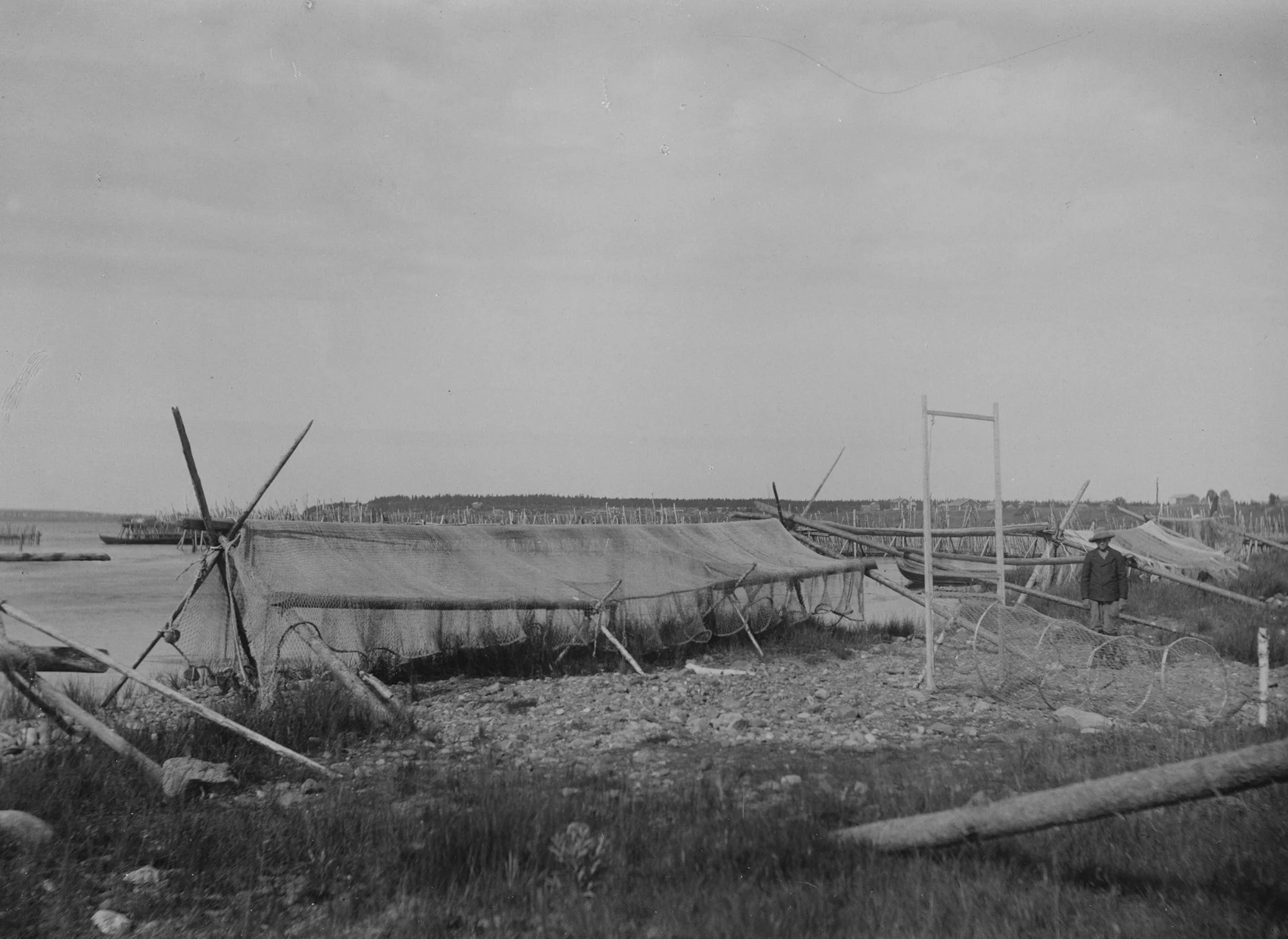

Fishing was food, work and income, but it was more than that. The arrival of migratory fish belonged to the calendar of the river. Settlements had grown around these fisheries. Knowledge accumulated through generations about water, seasons, boats, nets and fish. Research into the communities of the Kemijoki has described what happened after damming not simply as environmental change, but as cultural trauma. Livelihoods disappeared, landscapes changed and the relationship between people and river was broken with extraordinary speed.
Isohaara cut the migration route.
The native migratory fish populations of the Kemijoki collapsed. WWF's account of the river describes the loss as total. The salmon could no longer reach the breeding grounds that had sustained them, and after the first barrier came more power stations, reservoirs and regulated stretches of water.
I was born long after this had happened.
That may be the part I struggle with most.
My generation did not watch the salmon disappear. We arrived afterward. We inherited the altered river as normal.
We learned where the reservoirs begin and end. We learned where fishing is allowed around the dams. We learned the currents created by turbines and regulation. We caught stocked fish and talked about good fishing days. The concrete had already settled so deeply into the landscape that it was easy to imagine it had always belonged there.
Yet somewhere underneath that normality is another Kemijoki.
I have caught glimpses of it through my father.
When I was a child, we used to troll the lower river from a rowboat. On one trip we were moving downstream from the last bridge toward the place where the Kemijoki meets the sea. My father had one of his own lures behind the boat, something he had made from aluminium pipe.
Then the brake on the reel began to sing.
The rod bent toward the surface.
My father reacted immediately. He pulled harder on the oars for a few strokes, making sure the fish was properly hooked, then took the rod. I watched him work. There was no hurry once the fish was on. He played it patiently until eventually a beautiful sea trout appeared beside the boat.
I remember our excitement.
We kept that fish.
That is still part of how I fish today. I have never believed that respecting nature means never taking anything from it. Sometimes I keep a fish because I am going to eat it. I take what is enough for that day. Most of what I catch goes back, and the smallest and largest fish always return to the water.
There is a difference between taking something from nature and taking everything nature can provide.
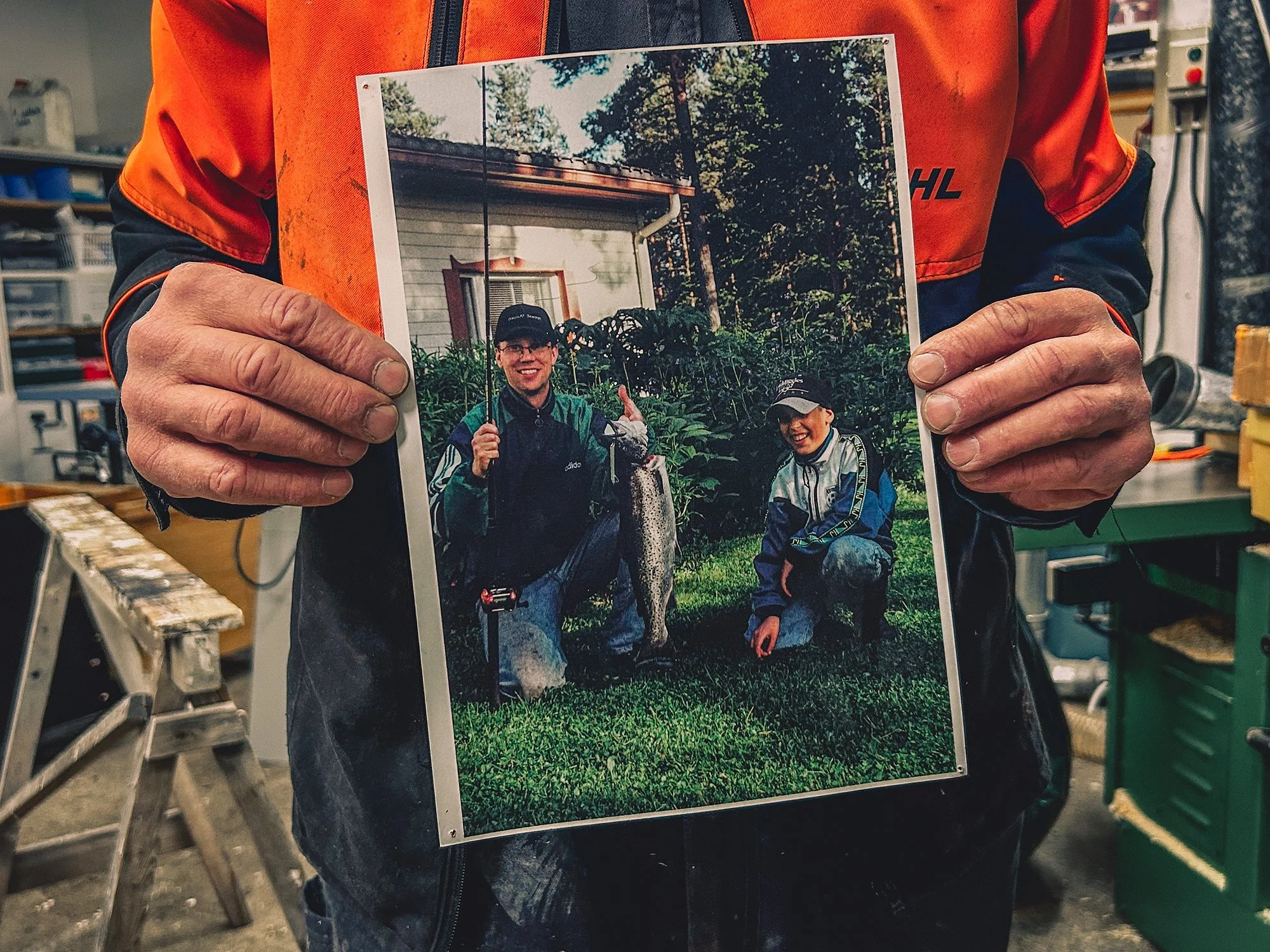
After that sea trout, we stopped at my father's uncle's place and photographed the fish in the front yard.
The photograph still exists. My father has it hanging on the wall of his workshop.
The lure still exists too.
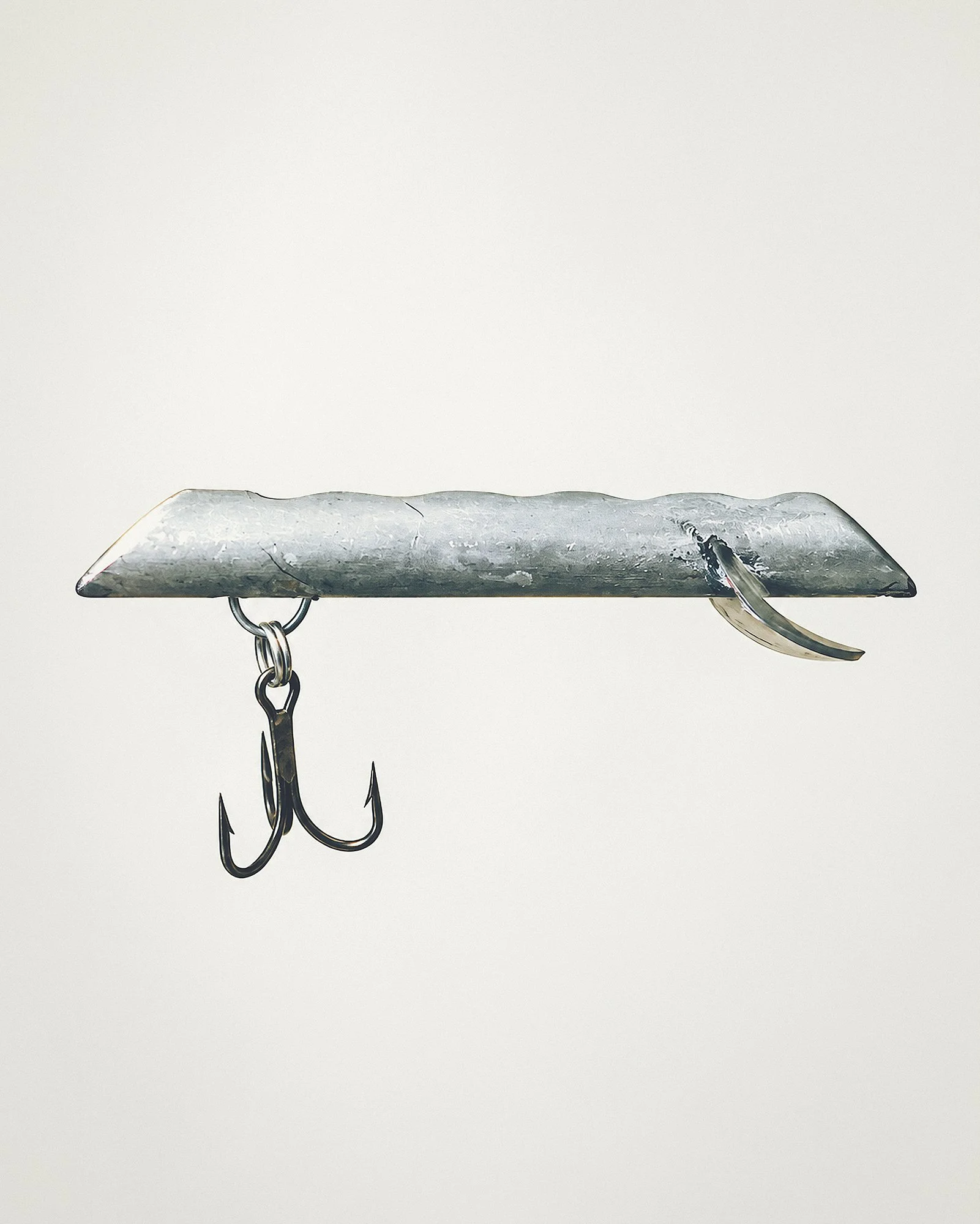
It sits in his tackle box among several other experiments he made himself. I would not fish with it now. To me it has become a family relic, a small piece of aluminium carrying a memory much larger than itself.
These days I tie flies.
I tie them for nearly every kind of fishing I do. Sitting at the vice has become almost as important to me as standing in the river. There is something familiar in that act now that I think about my father's old lures. He worked with metal. I work with hooks, thread, feathers and fur. Both begin with the same quiet belief that something made by your own hands might eventually fool a fish.
Perhaps that is another inheritance from the river.
For years, fishing was not the centre of my life. Photography was. I travelled around the world focused almost completely on making images. Finland became somewhere I returned to when I needed to reload and ground myself. I began finding that grounding on smaller Finnish rivers and on trout rivers in Norway.
Eventually I came home properly.
Now the Kemijoki is once again the closest river to me.
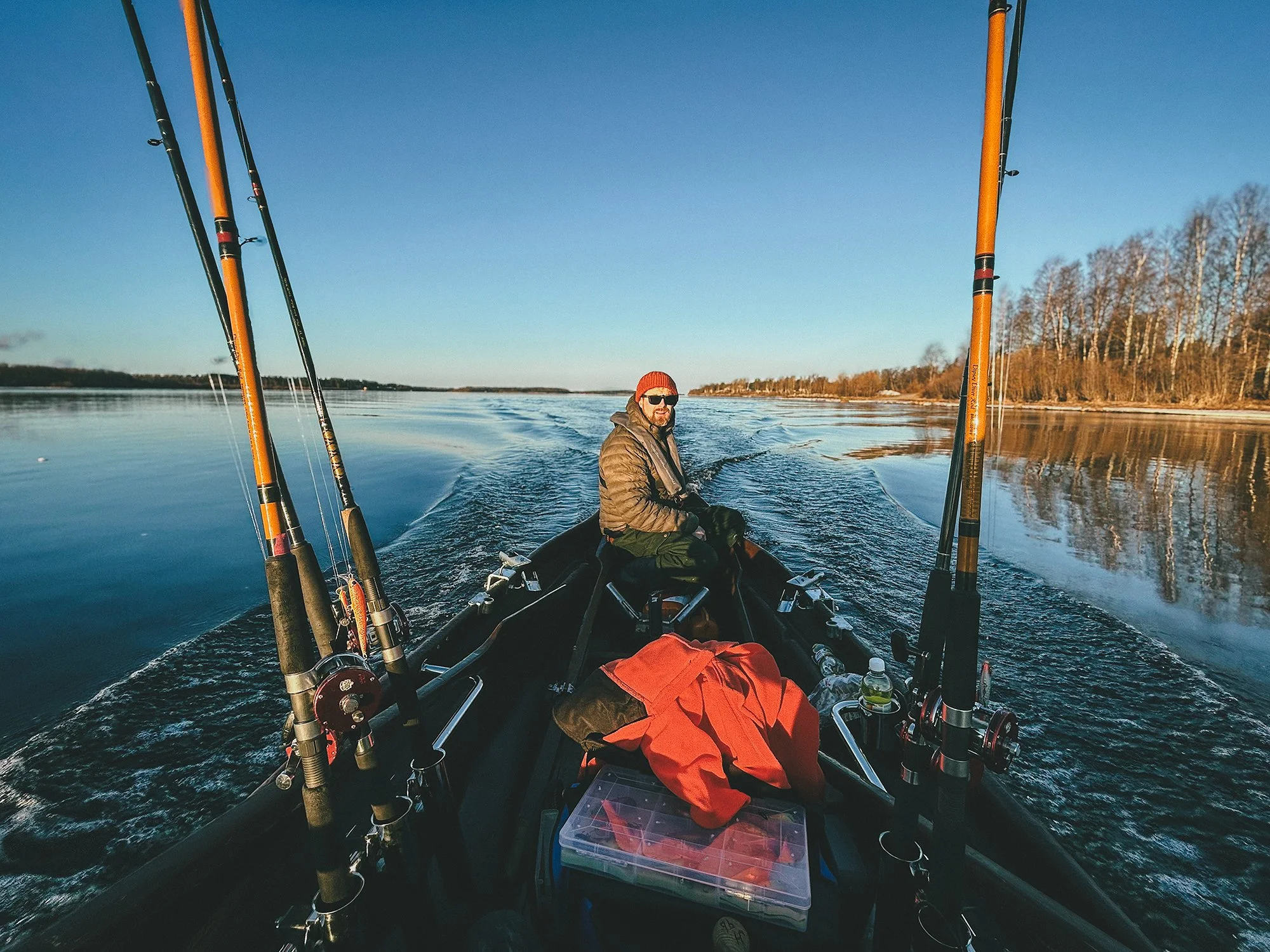
I can go there with a fly rod and look for trout. I can study the water, choose a fly, make a cast and spend hours learning the same lessons fishing has always taught me.
Patience is one of them.
Fishing teaches you to live with disappointment. You can prepare carefully and still catch nothing. You can make the right cast and watch a fish refuse. You can lose something you wanted badly and return the next day anyway. Success cannot be demanded from a river.
For most of my life I have considered that one of fishing's great lessons.
The Kemijoki has made me realise that patience and acceptance are not the same thing.
There are things we should wait for, and there are things we should refuse to accept.
Nearly eight decades have passed since the migration route of the Kemijoki was severed. The debate has moved through stocking programmes, fishways, compensation, legal obligations, studies, applications and appeals.
The companies operating the river now speak the language of sustainability.
Kemijoki Oy describes itself as aiming to be a leader in sustainable and flexible hydropower and says that its operations are based on using hydropower in a way that is sustainable for nature, people and the economy. Elsewhere it describes the electricity connected to its operations as climate-friendly and presents itself and its partners as experts in sustainable hydropower. The company also states that it is responsible for environmental and licensing strategies connected with its operations.
Those words become difficult for me when I stand beside the river.
Sustainable for nature.
A trout does not understand corporate responsibility programmes. A salmon does not understand carbon accounting. It knows current, temperature, scent and the ancient pull toward the water where its life began.
If concrete blocks that journey, the terminology surrounding the concrete changes very little for the fish.
Kemijoki Oy does not own Isohaara. The lowest power station is owned by PVO-Vesivoima. Kemijoki Oy owns the other seven power stations on the main stem upstream. That distinction matters. So does another fact: the Finnish state is the largest shareholder in Kemijoki Oy, directly owning 50.10 percent of its total share capital. Fortum Power and Heat owns another 28.27 percent.
This is therefore not only a story about decisions made by distant private interests.
Public ownership is part of the river's present.
Kemijoki Oy does carry out fisheries work. The company says it releases more than six million juvenile and catch-size fish each year into the Kemijoki and its marine influence area and spends about 3.3 million euros annually fulfilling fisheries obligations, excluding its own labour costs. It is also developing a fish passage solution at Taivalkoski.
Those efforts should be acknowledged.
They should also be placed beside the scale of the original loss.
Stocking fish is not the same thing as restoring a river.
A fish born in a hatchery, transported by truck and released below a dam may satisfy an obligation on paper, but it does not restore the process that existed before the river was divided. A living migratory population depends on fish being able to move through the system, reproduce naturally and allow natural selection to work generation after generation.
WWF has made the same fundamental point. When authorities proposed new fish passage obligations for the Kemijoki in 2024, WWF welcomed the direction but appealed the decision because it considered the required flows inadequate. In a river the size of the Kemijoki, WWF argued, passages carrying too little water could become little more than streams that salmon and trout might struggle to locate. WWF also criticised the exclusion of power plants farther upstream and argued that restoring migratory fish requires genuine passage and natural reproduction rather than continued dependence on massive stocking programmes.
Kemijoki Oy has argued in response that some of the proposed requirements are unrealistic, that they would significantly reduce hydropower production and that the costs and production losses could exceed 800 million euros over twenty-five years. The company says it also wants migratory fish back in the Kemi-Ounasjoki system, but believes a completely self-sustaining wild population under the proposed requirements is impossible to achieve.
This is where my patience ends.
I understand that electricity has value.
I understand that hydropower has a role in balancing a modern electricity system.
I understand why these dams were built.
I understand that removing them would require difficult decisions, engineering, money and changes in the way energy is produced and consumed.
I still believe the dams should come down.
At some point, acknowledging complexity becomes a way of avoiding a simple truth. We placed barriers across a migratory river. The salmon disappeared. The trout lost access to habitat. A fishing culture collapsed around them. Generations grew up beside a river fundamentally different from the one their ancestors knew.
We can continue managing that loss forever.
We can continue planting fish, carrying them, counting them, modelling them, compensating for them and designing increasingly sophisticated ways to move a fraction of them around concrete.
Or we can begin giving the river back what we took from it.
I know which future I want to see.
I want to stand beside the Kemijoki and watch salmon jump again, not because someone transported them above a dam but because they travelled there themselves.
I want trout moving between feeding grounds and spawning water without encountering a wall.
I want children growing up beside this river to know its natural rhythms rather than learning only the operating rhythms of power stations.
I want people along the river to adapt once again to the life cycles of the river, instead of requiring the river to adapt endlessly to ours.
Most of all, I want to see what happens when we stop interfering.
Nature does not need us to design every part of its recovery. Sometimes it needs gravel returned to a channel, habitat repaired and water allowed to move. Sometimes it needs a barrier removed.
Photography by Esa Ylijaasko
Then life starts finding its own way back.
There is grief in imagining that future because I know I can never recover the Kemijoki of my childhood. That river was already gone before I arrived. There is an even deeper grief in knowing that the wild river disappeared before my father's childhood too.
We were left photographs, stories and fragments.
A sea trout on the wall of a workshop.
An aluminium lure resting in an old tackle box.
Memories of people who once lived according to salmon runs.
The silence where rapids once sounded.
What disappeared from the Kemijoki was never only a fish population. A relationship disappeared with it. People lost livelihoods, traditions and a way of understanding the place where they lived. My generation lost something more difficult to describe because we never possessed it in the first place.
We lost the chance to know what kind of people we might have become around a living river.
Still, grief does not have to be the final inheritance.
I will keep returning to the Kemijoki with my fly rod.
I will keep tying flies at my desk, winding thread around hooks in the same spirit that once made my father cut pieces of aluminium pipe into fishing lures.
I will keep looking for trout.
Fishing has taught me to be patient with fish, weather, current and failure. It has taught me that a river owes me nothing.
But patience with nature is different from patience with decisions made by people.
Concrete is not geology.
A dam is not a mountain.
What humans built, humans can remove.
The Kemijoki is still underneath all of it, carrying water toward the sea as it always has. Give that water a free path again and salmon will try to follow it. Trout will find places we have forgotten. Gravel will move. Floods will shape banks. Plants will return. People will adjust.
The river will begin doing what rivers have always done.
Healing itself.
Photography by Esa Ylijaasko
